Linnunrata
The Bird’s Path
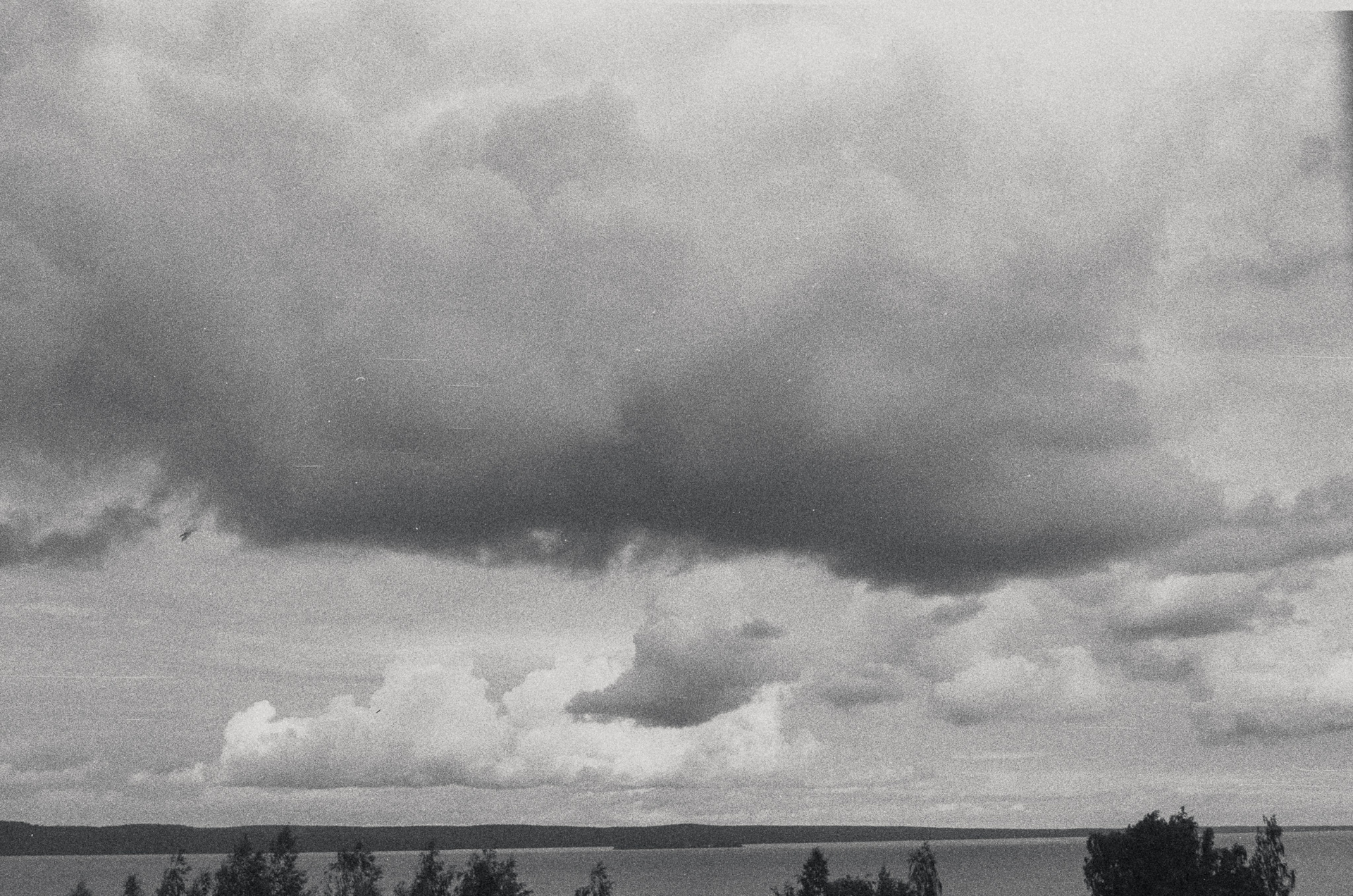
I live in Karelia, on the shores of Lake Onega. Every spring and autumn, V-shaped flocks of migratory birds fly over it.
In the Karelian-Finnish tradition, the Milky Way is called Linnunrata—the “Bird’s Path.” It was believed that migratory birds flew along this celestial road to Lintukoto—the “Bird’s Home"—carrying the souls of the dead with them, and returned back in the spring.
This myth has an unexpected connection to science. Today, it is known that birds are actually capable of navigating by the starry sky. The stars become a coordinate system for them, helping them find their way.
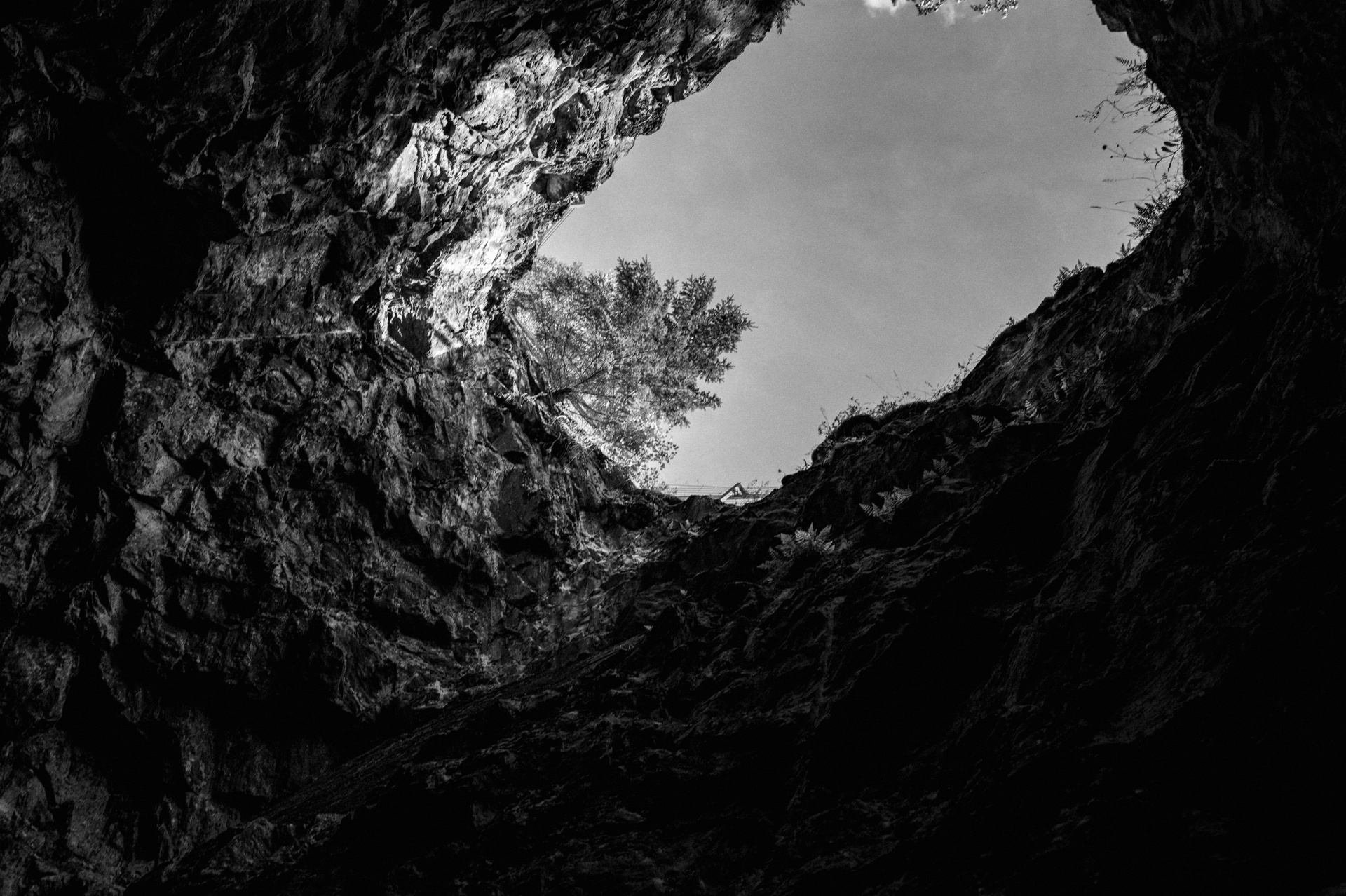
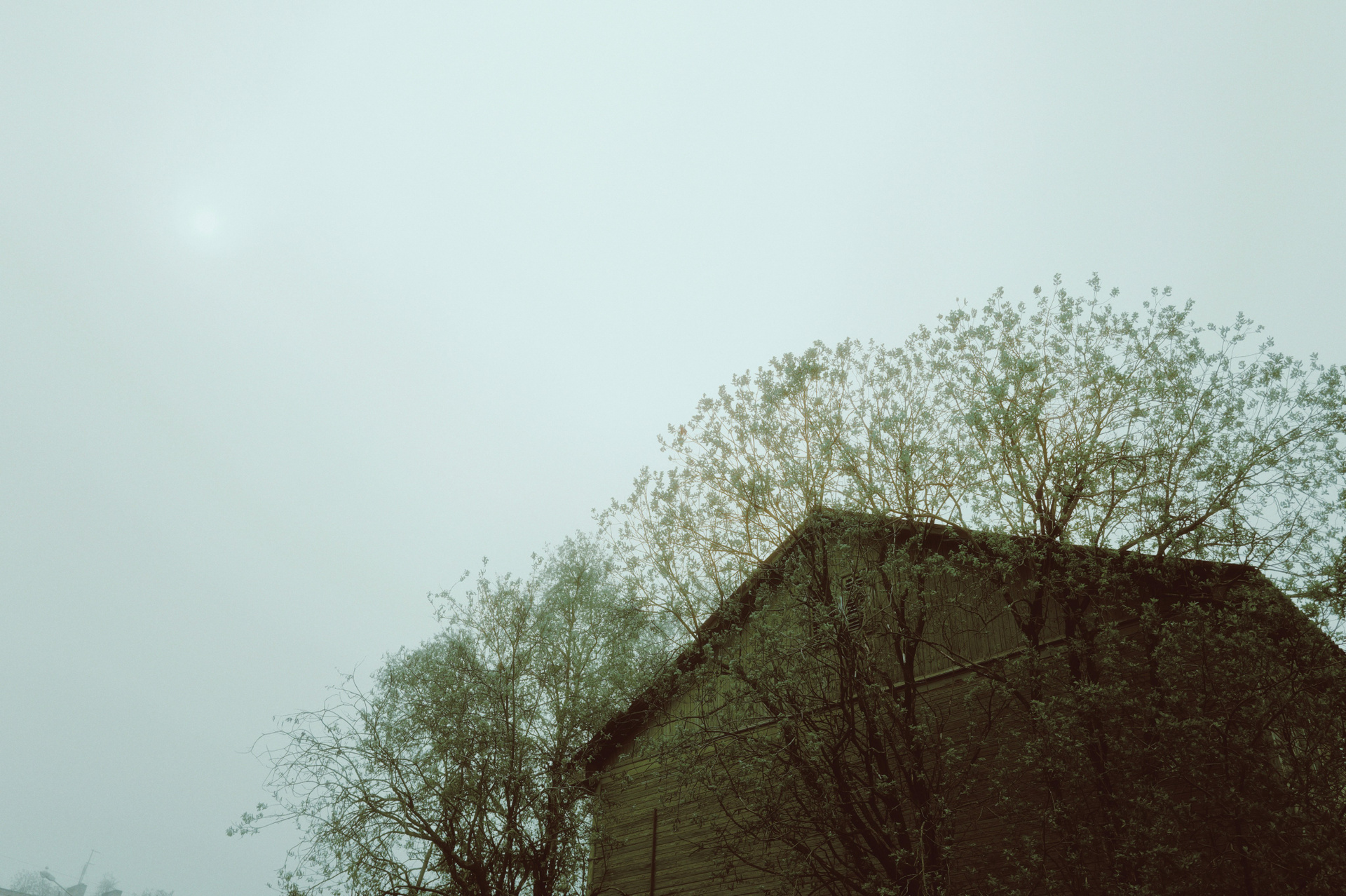
I became interested in this ability of birds to find their way and return. Humans, too, have their own points of orientation. We create maps and navigation systems to understand where we are and where we are going. But there are other kinds of reference points as well — family, culture, the place where we were born, and ideas about how our lives are supposed to unfold.
What turns a route prescribed from outside into a path of our own? How do we understand where we are moving within our own lives?

This is how Linnunrata shifted for me from the sky to the earth.
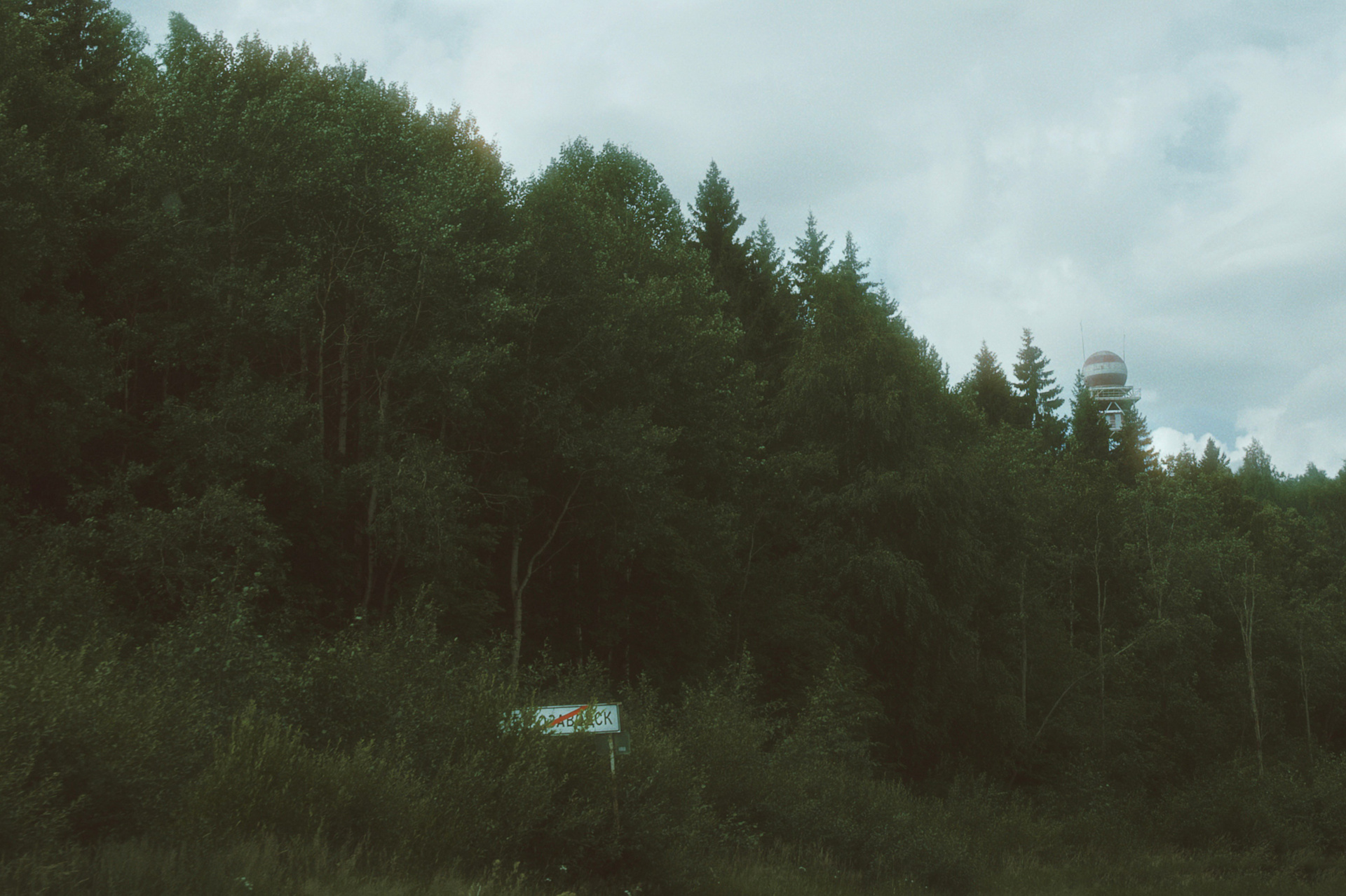
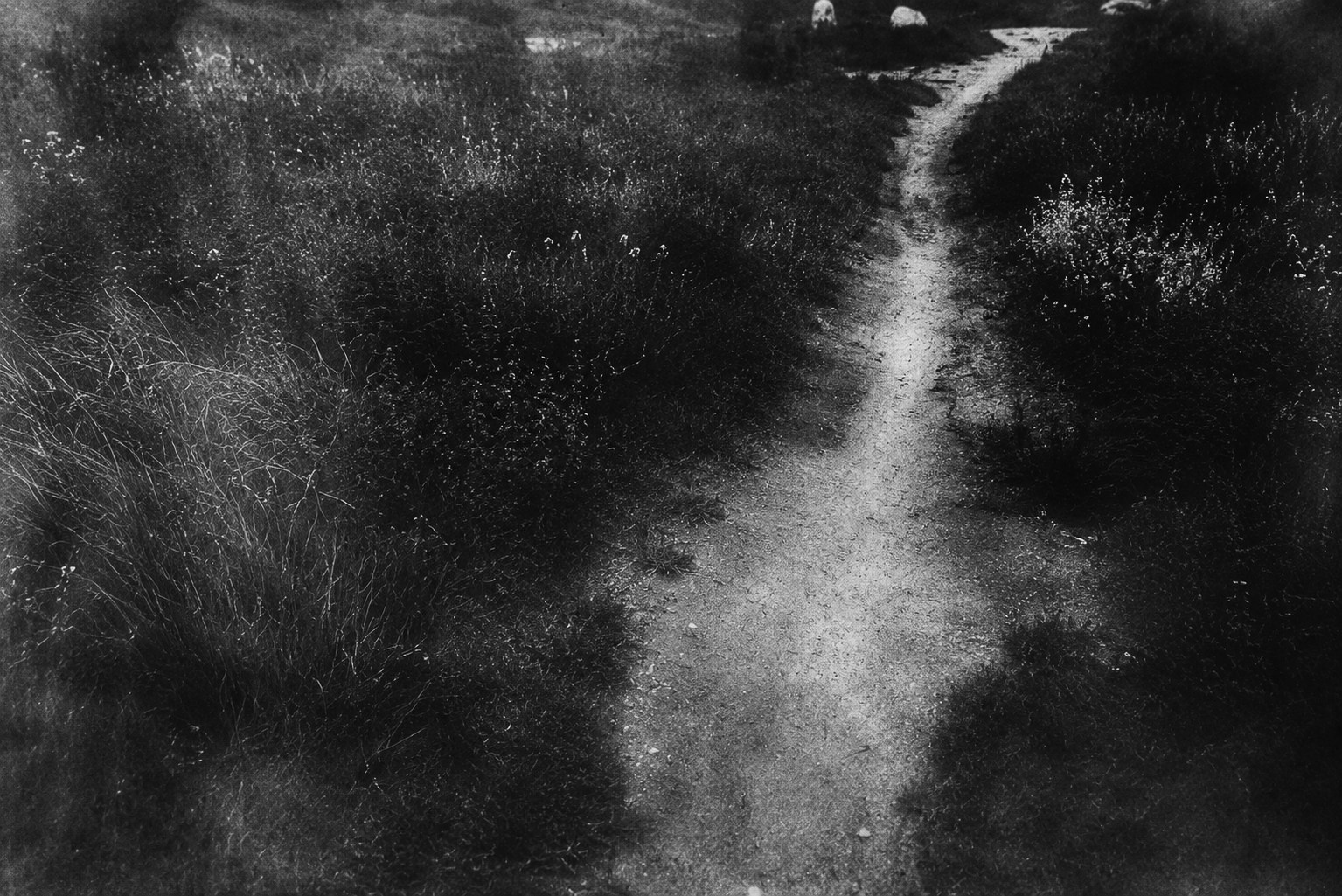
I walk routes along Lake Onega, recording not only geographical points but also what happens to me along the way: I take photographs and videos, record sound, and note the time, distance, weather, smells, and unexpected memories. Sometimes nothing remarkable happens. Sometimes a familiar place suddenly takes me back to my childhood or evokes a feeling I did not expect.
During these walks, another text entered the project — Song No. 44 from the second book of Kanteletar, a collection of Finnish and Karelian folk songs and lyrical runes compiled by Elias Lönnrot. In it, a young woman dreams of becoming a bird so that she can cross the distance and reach her beloved. In the video, these words are heard in Finnish together with the sounds of water, wind, and birds. The song becomes part of the space I am moving through.

Gradually, these observations begin to form a map of my own. It has no street names or precise coordinates. Instead, there are words, sounds, memories, the smell of freshly cut grass, wind, and the sound of water. It is not so much a map of a place as a map of what happened to me as I walked.
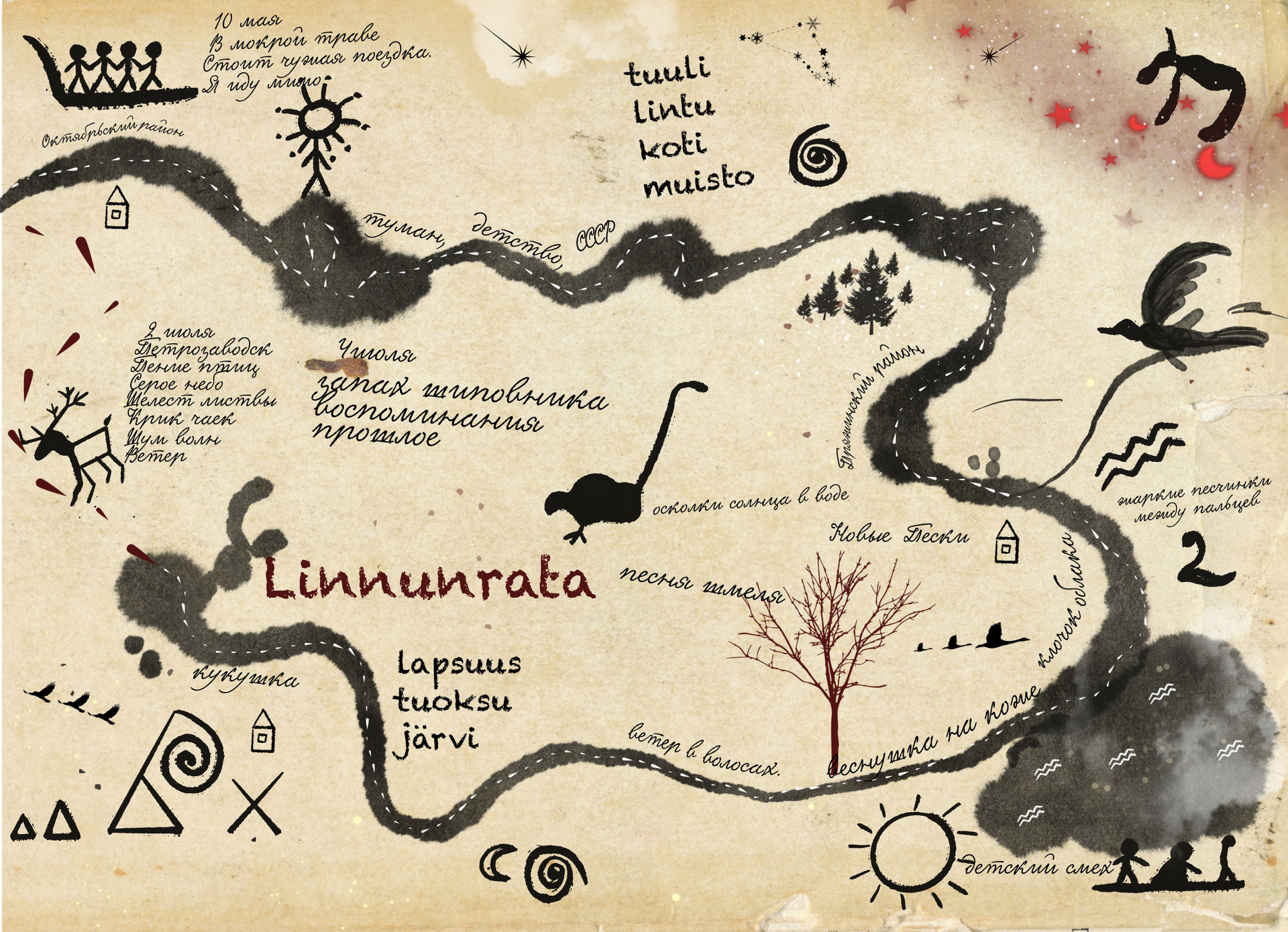
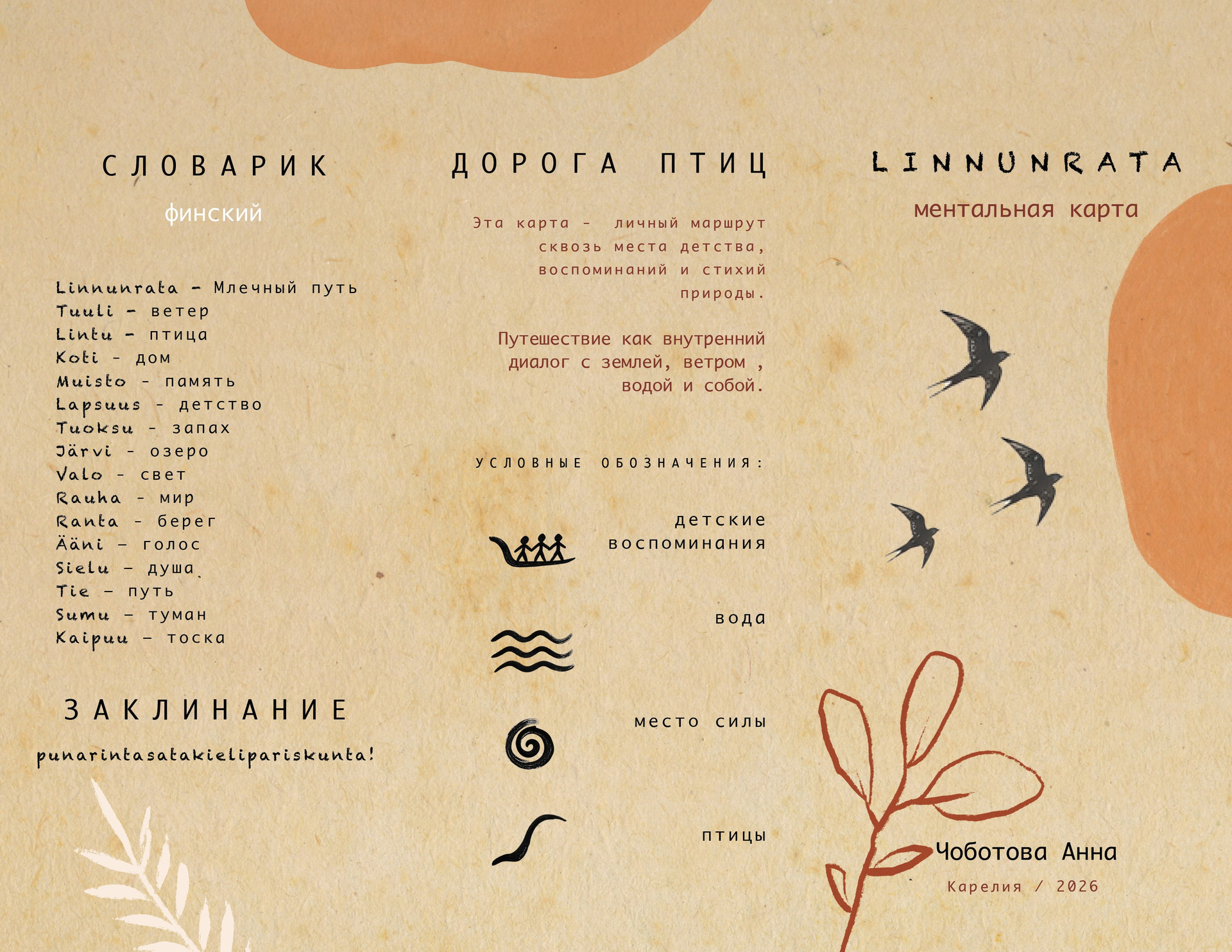

The final route takes me to the Karelian village where my grandparents lived and where I spent my childhood. I walk through the village towards their house. And here, the question of the path unexpectedly becomes connected to another question: what is home? Is it the place we come from? The place we return to? Or a place we have yet to find?
Thinking about this question, I remembered two very different women from the same family.
My husband’s aunt had been oriented towards home since childhood: she was taught to help around the house, sew, work in the garden, and prepare for family life. Home did not become a limitation for her, but rather the place she wanted to be. I recorded a conversation with her.
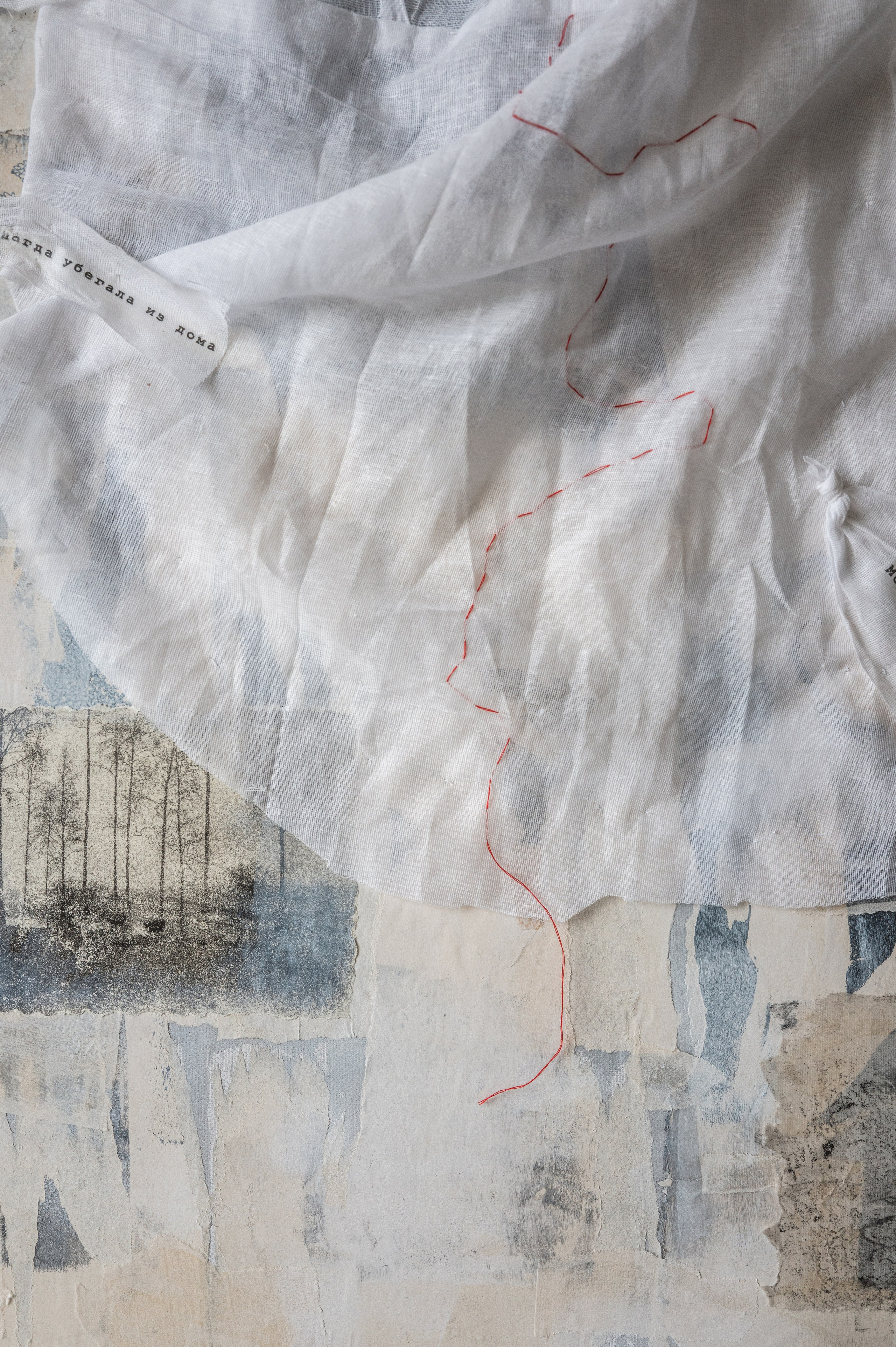
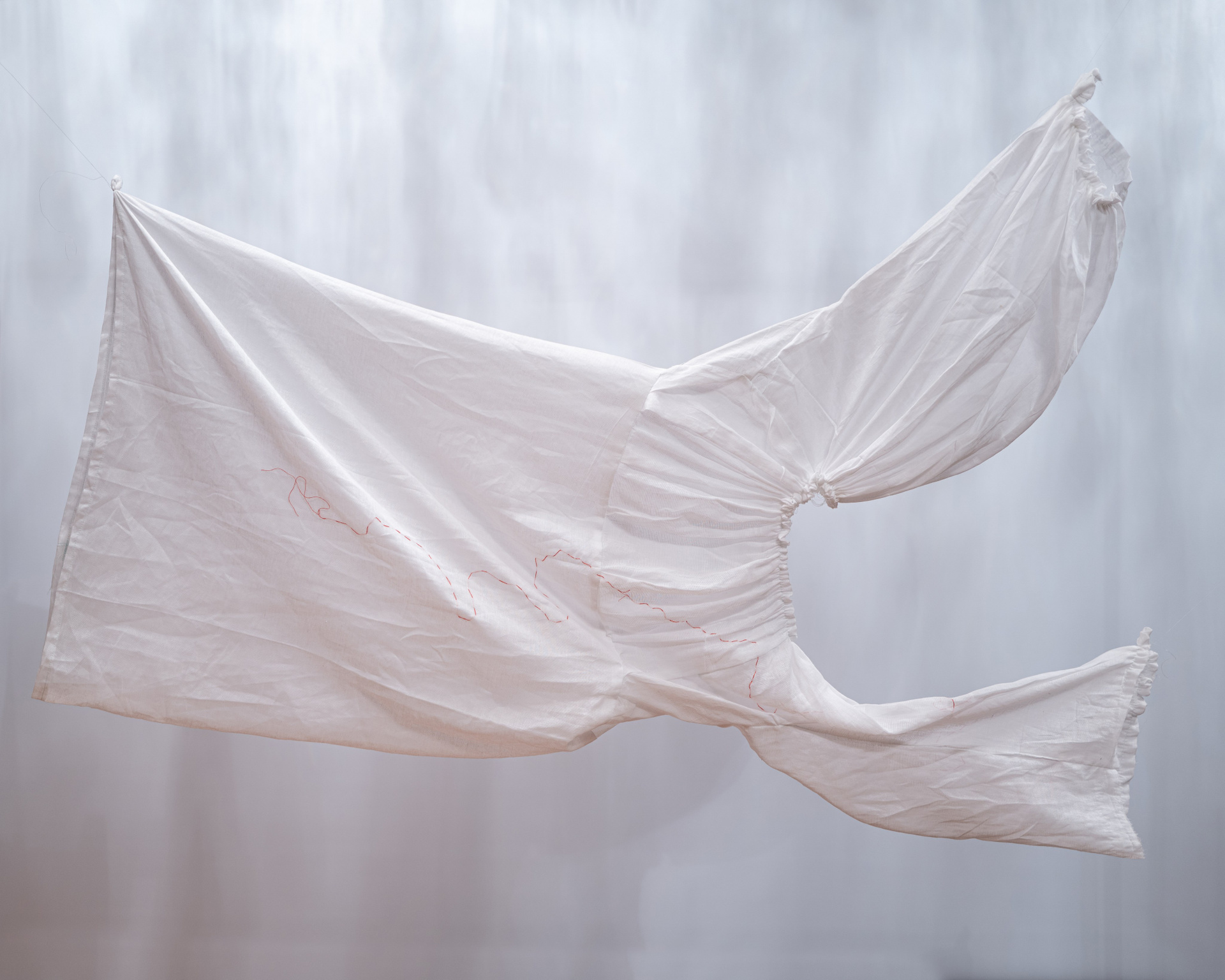
Her voice can be heard in a video in which I embroider a Karelian shirt that I made myself. For me, her memory and my own movement come together here: she recalls the beginning of her life, while a line tracing the route I have already walked gradually appears on the fabric.
The needle moves across the fabric, stitch by stitch, just as I had moved across the land. Part of the thread remains visible on the surface, while another part is hidden on the reverse. It is impossible to see the entire path at once.
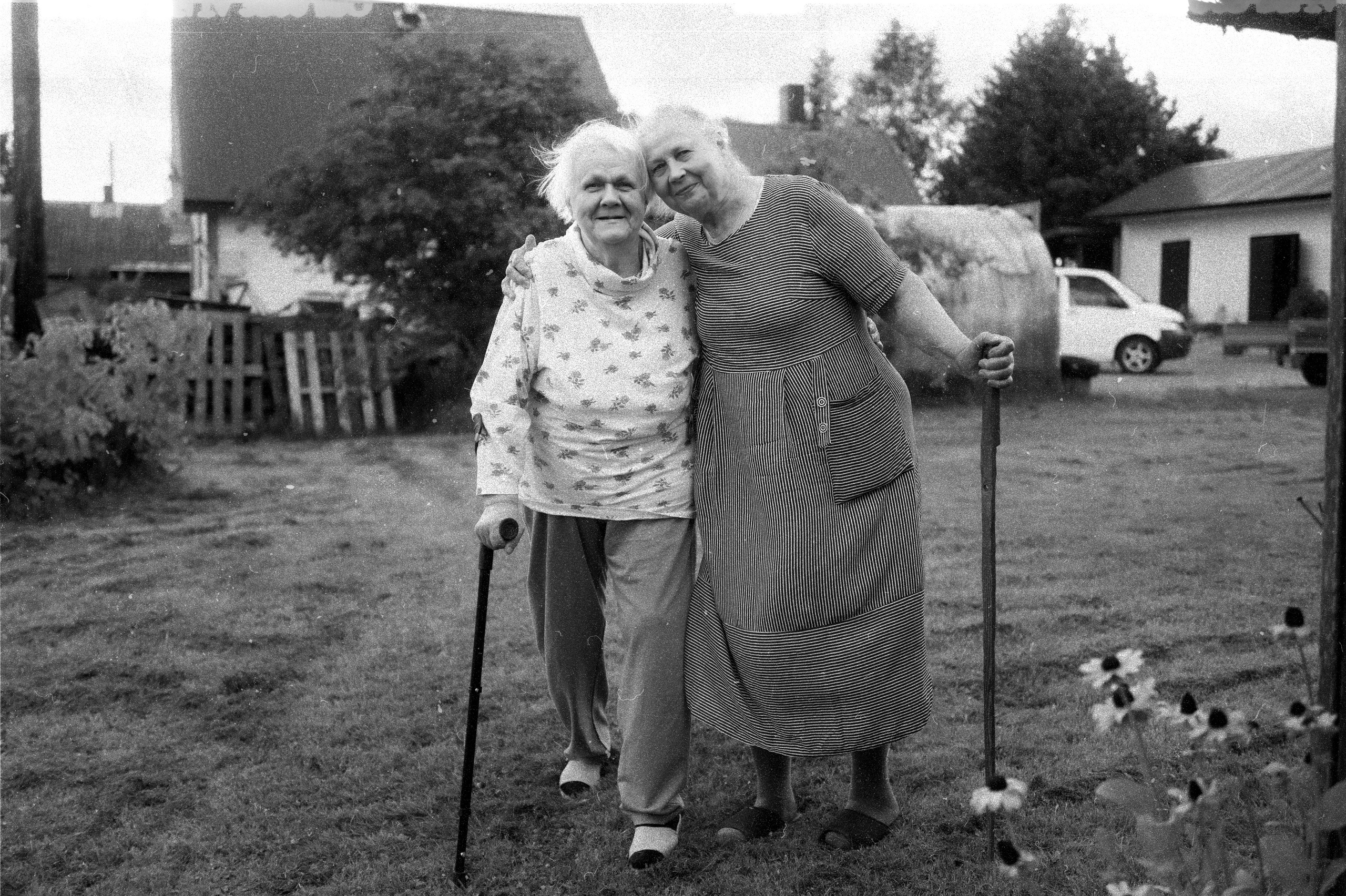
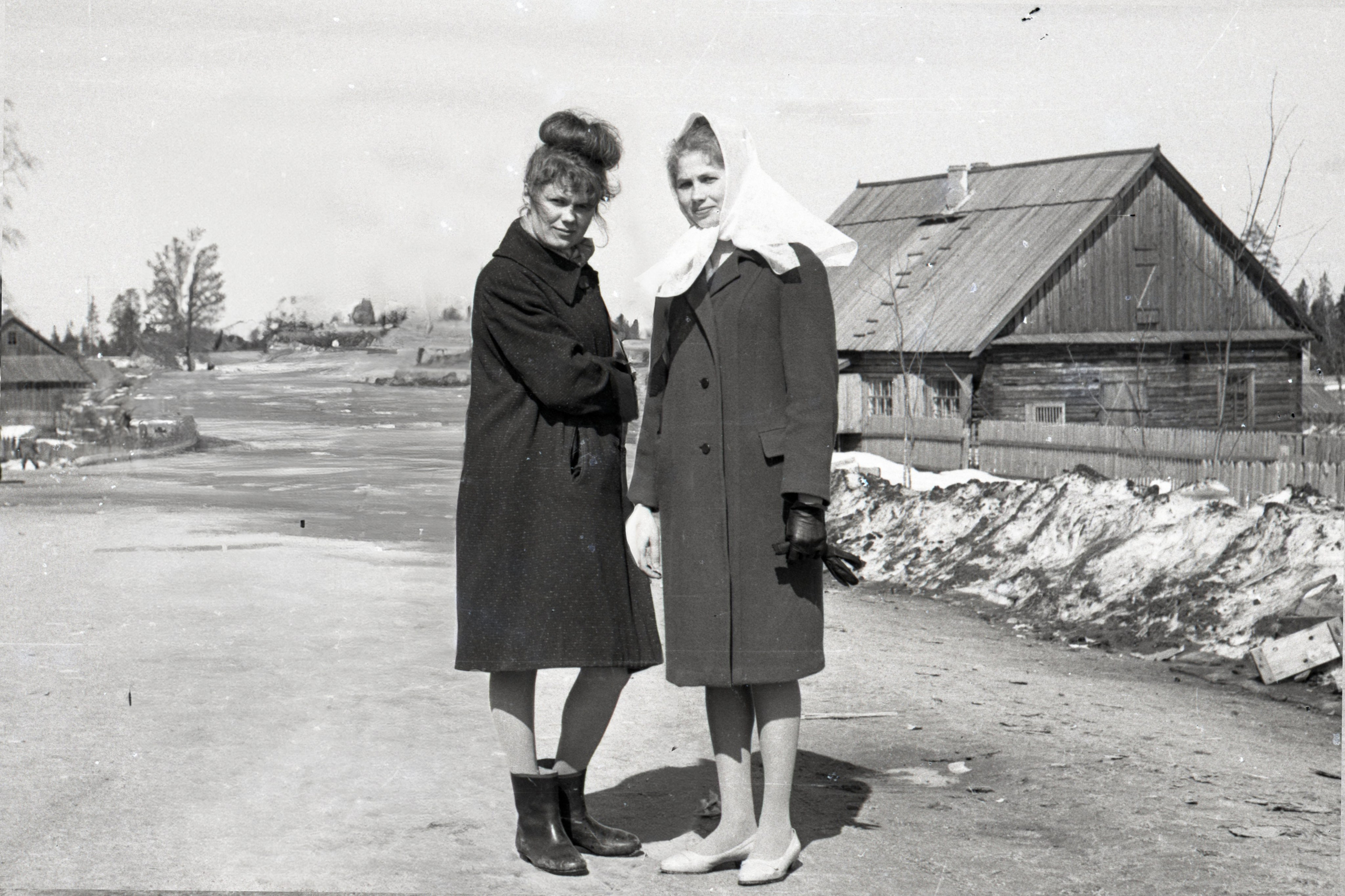
The second woman is my mother-in-law. She grew up with more freedom. As the youngest of four children, she was given more leeway. She could spend a lot of time outdoors, walk to neighbouring villages, take photographs, and she had many friends. In her, I sense a different kind of movement — outward, beyond the boundaries of home.
I began to think about how early a sense of direction begins to take shape in a person: some are guided towards home from childhood, while others are drawn beyond it. The shirt therefore became more than just an object for me — it became a form of a human path. First, I sew and embroider it while listening to the voice of a woman speaking about home. Then I begin a conversation with my mother-in-law — about childhood, freedom, dreams, flight, and how she imagined her life.
From this conversation, I select individual phrases and bring them into the work. They are no longer heard as a voice, but remain on the surface alongside photographs, paper, and paint.
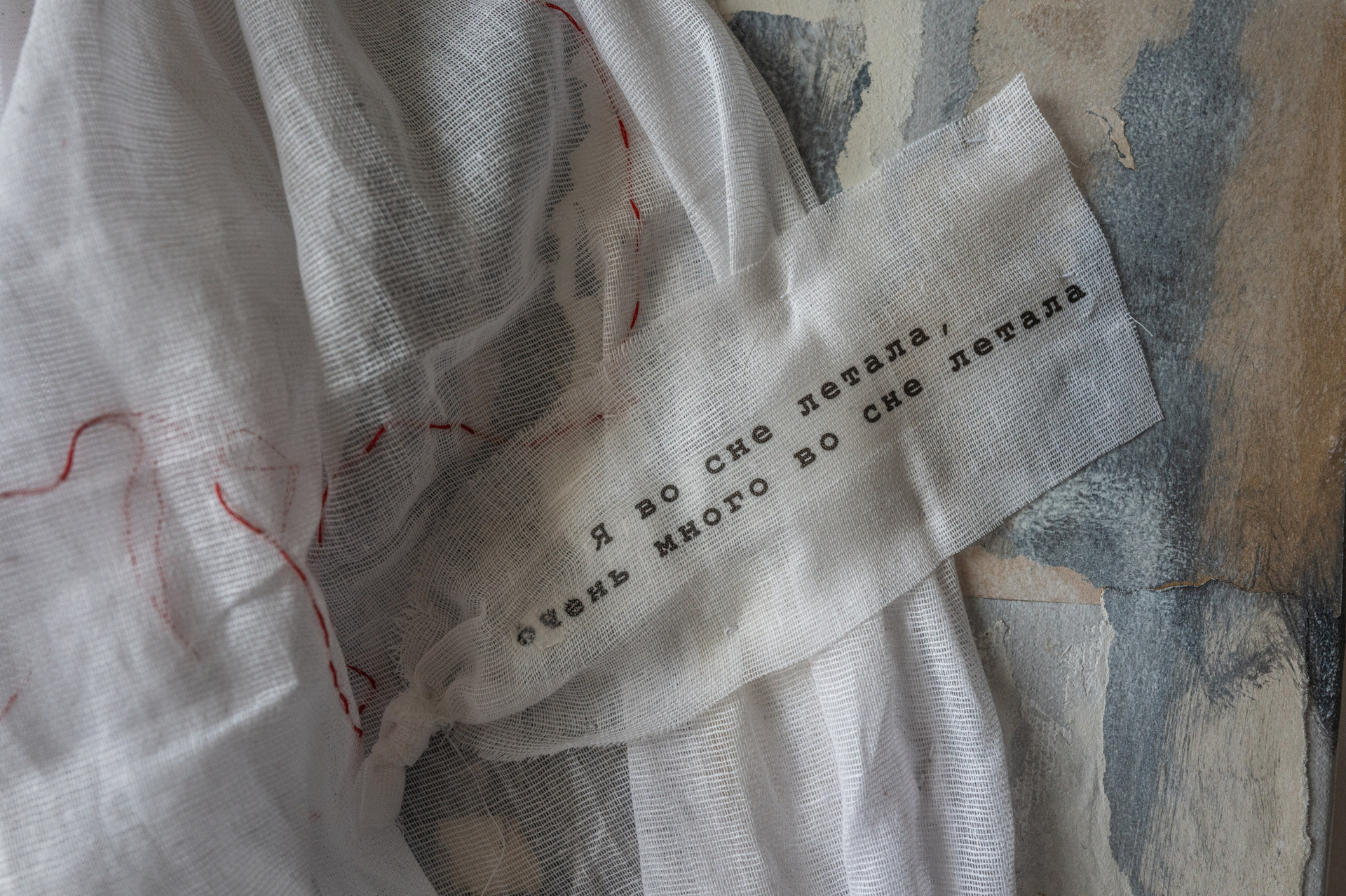
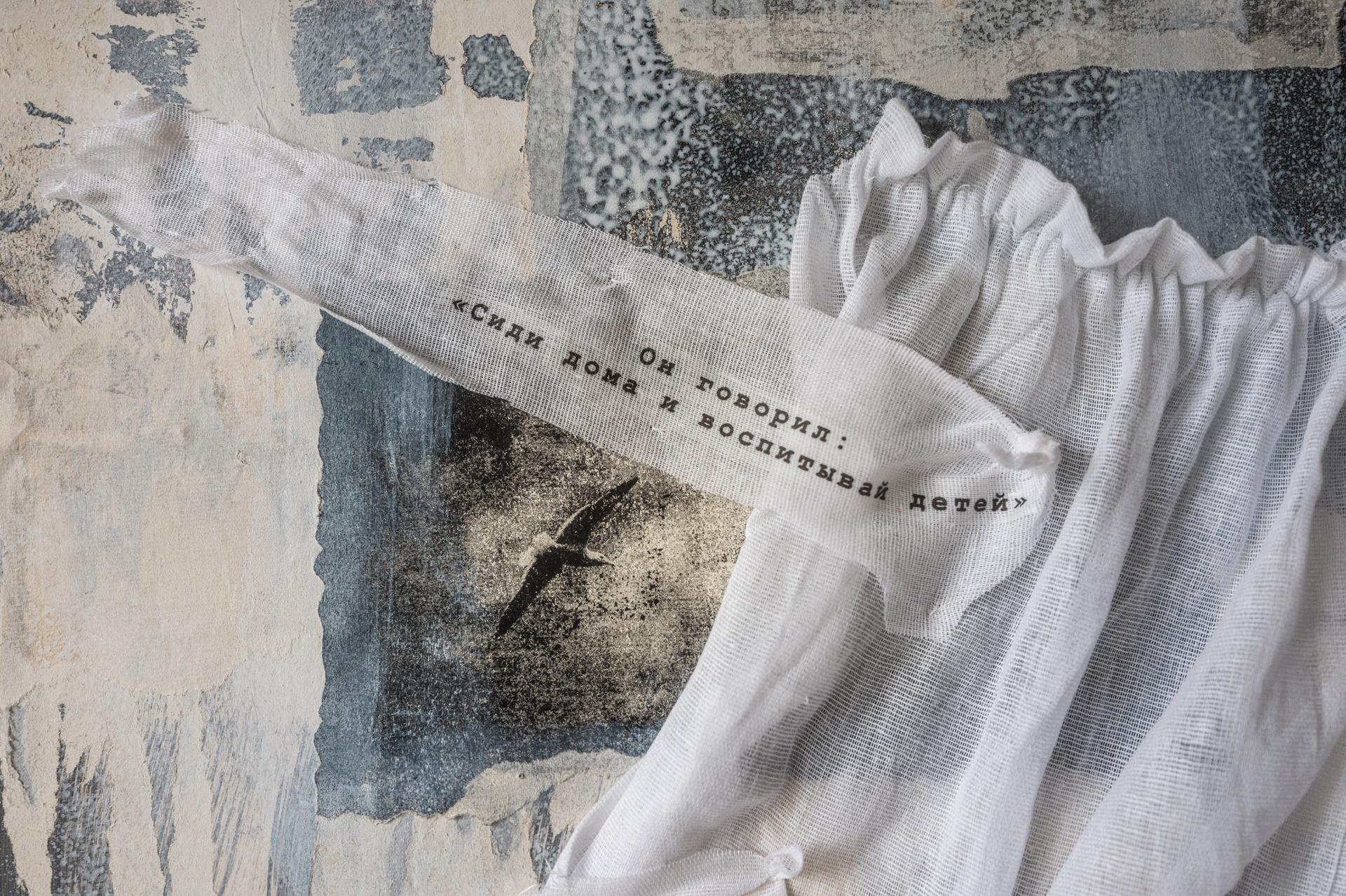
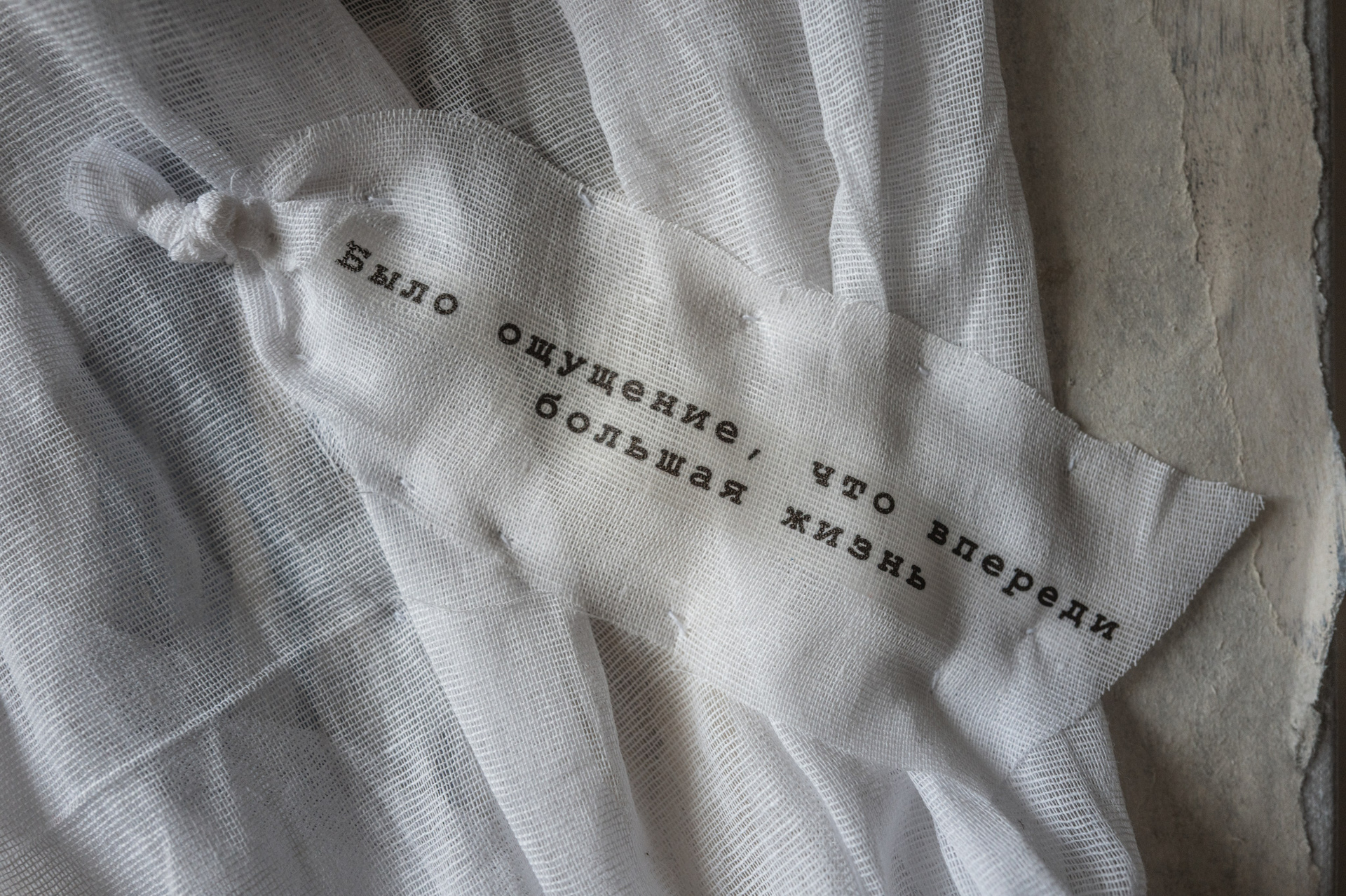
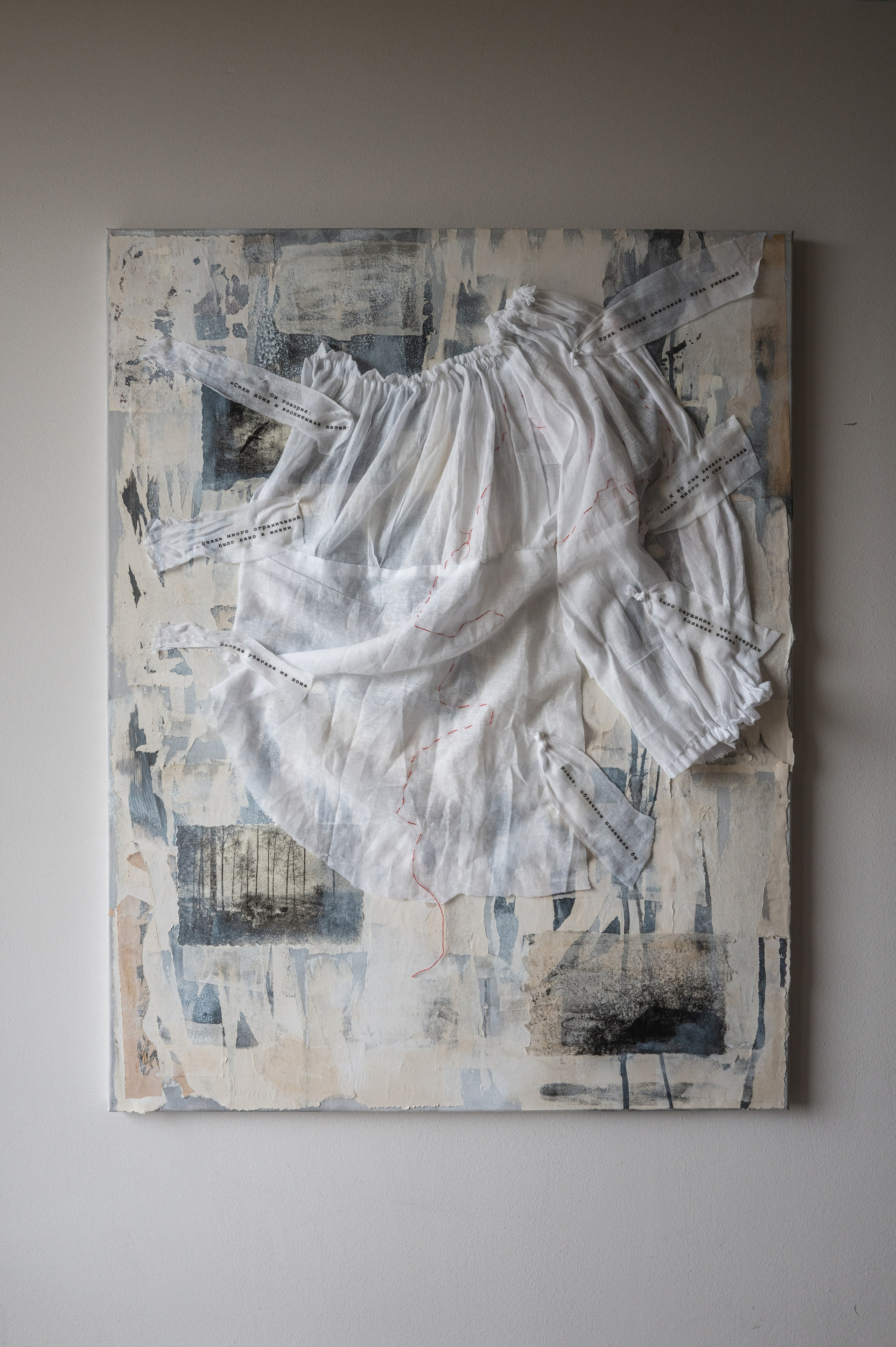
Linnunrata, 2026
Canvas, acrylic, paper, monotype, lithography, linen, thread, heat transfer
90 × 70 cm
The shirt becomes the final material form of the entire research process. It brings together the routes I have walked, the mental map, the embroidered line of the path, photographs, conversations with two women, their words, and my own questions about home, movement, and choice.
I began the project by looking for a route that could be found and followed. Gradually, I came to understand that a human path does not exist as a ready-made line. Much is given to us in advance — the place where we are born, home, family, other people’s expectations, circumstances. But our own path takes shape through the way we move between them, what we choose, what we leave behind, and where we return.